Most of the people I work with are busy being capable. Head down, delivering, holding a lot, for a long time. Which is often exactly why important signals (the flatness, the restlessness, the sense that something no longer quite fits) can go unexamined for months. There’s no time to think, so the thinking doesn’t happen, so nothing changes. Sound familiar?
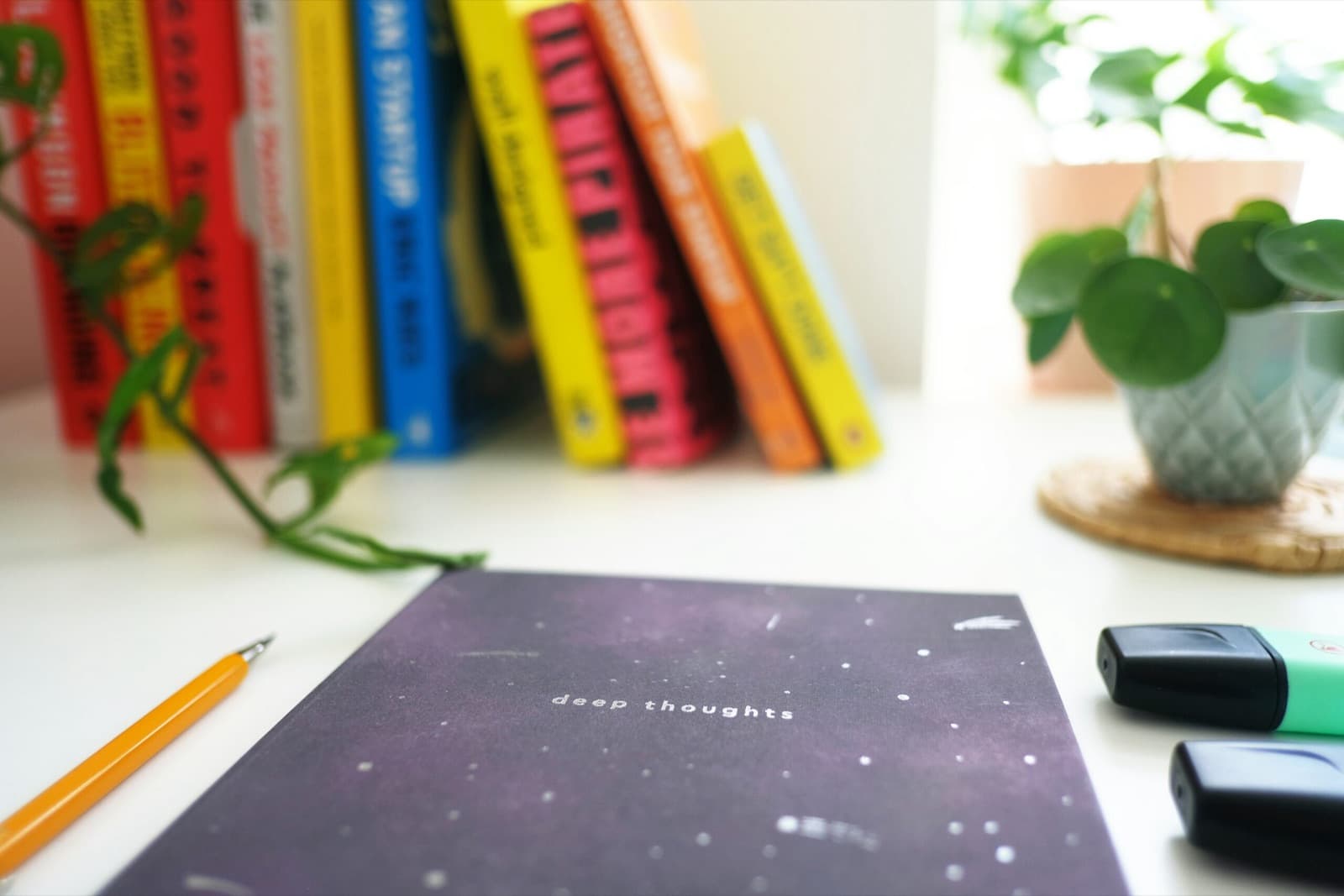
Reflection is how you interrupt that. It’s a way of improving self-awareness by looking back: a little audit of your own behaviours, thoughts and feelings, then and now, to help inform your present. It can bring deeper understanding, clarity of thinking and a general decluttering of the mind.
When people sit down to do it, they tend to land in one of three places. Some find a blank space, with no real sense of what else there might be. Others have a wealth of ideas, thoughts and options all swimming around at once. Perhaps you’re somewhere in the middle: some sense of direction, but not enough to grasp.
Whichever it is, that moment can become overwhelming. And you just don’t know where to start. It gets difficult, and you think, well, maybe my life is totally fine anyway, and retreat back to your comfort zone. Totally normal. The thing to remember is that change is all about small steps.
So if you’re up for a small step, with no right or wrong answers (there’s no solution required, no conclusion you have to reach, just letting your mind explore a little more), keep reading.
How to do this
Find a quiet space and think the questions through in your own time, or read them all first and answer them over days. Write answers as a list, write paragraphs, record voice notes, or partner with a friend and ask each other, keeping your answers to look back through. Whatever suits you: no right or wrong, just a small step, in your own time.
Two tips:
- Once you feel like you’ve answered a question, ask yourself “What else?” You might be surprised what extra thoughts come up when you nudge your thinking a little more each time.
- Look back through your answers a few times, in different moods. Your mood may unlock extra thoughts and different perspectives.
The ten questions (and what to do with each answer)
1. What do I enjoy?
→ Think about how much time you spend doing what you enjoy, and how you could do more of it: more often, and in more ways. If you enjoy reading, that might mean regular time set aside, or a local or virtual book club.
2. What do I do that I don’t enjoy?
→ Spending more time than necessary on things we don’t enjoy causes unhappiness, drains energy and eats the time we could spend on what we do enjoy. Looking at your list: how could you reduce or stop those things? Watch that voice in your head that says “you have to” or “you can’t stop”, and challenge it. Would there be dire consequences, or temporary discomfort and adjustment?
3. What’s missing in my life right now?
→ How could you work towards making that happen? Break the end goal into smaller steps, pick one milestone and focus there. If you want to be fitter, what steps would get you there, and which one could you start now?
4. What makes me happy?
→ A big question, so think big. Dig into your memory bank, past and present. Anything goes, big or small. Use the answers to inform decisions you need to make now or later: if you’re looking at a new role, knowing what makes you happy shapes what you look at.
5. Which accomplishments am I most proud of?
→ Moments we’re proud of tell us what’s important to us and what drives us. Think about those moments in detail: what was it about them that makes them matter to you? What do you notice? Any common threads?
6. What haven’t I done, that I wish I had?
→ Which answers stand out? How do you feel when you think about them? Are there any you still want to do? What’s possible for you?
7. When I think about change, what do I want?
→ A really open question. Be honest with yourself and go as broad or as deep as your mind takes you. (Don’t worry about whether it’s possible or what it would need to look like. You’re just capturing your thoughts. There’s no commitment.)
8. How would it change my life?
→ Take your answers to question 7. If those changes did happen, how would life be different: practically, mentally, emotionally?
9. What’s stopping me?
→ Still with question 7 in mind: what has stopped you so far? Do you notice any trends in the thoughts or behaviours that tend to stop you? (If fears keep appearing here, the Fear Inventory is a practical way to sort them.)
10. What’s my biggest fear?
→ Calling your fears out is a good start to naming them and loosening their grip.
Bonus: 11. What’s my incentive to change?
→ Being very clear on why you want change boosts the motivation and confidence to make it happen. What’s driving you to want what you want? Why does it matter to you?
Then: read the whole thing back
This is where there can be real value for you. Once you’ve been through the questions (and been back with “What else?”), read your answers as one document rather than eleven separate ones. You’re looking for four things:
- Repetition. What shows up more than once. Repeated words, themes, thoughts. They are rarely accidents.
- Tension. Where do two answers pull against each other? Wanting more stability and more adventure, say. Both can be true. Naming the tension is more useful than pretending one side isn’t there.
- Energy. Which answers came quickly and warmly? Which made you sit back in your chair? Where you felt something is usually where the information is.
- Assumptions. Any sentences with “I can’t”, “I have to” or “it’s too late” hiding inside them? Underline those. They may be true. They’re worth testing rather than obeying.
The aim is to find the two or three threads that really resonate, and one small step for each.
If the questions have stirred up more than they’ve settled, that’s actually the exercise working: you’ve started to get underneath the surface. And if you’d value making sense of it with someone whose job is exactly that, a Clarity Creator session is a focused 90 minutes built for it. Bring your answers and together we can work out what they might be telling you.